
Pu-erh is a legendary Chinese tea from Yunnan, known for post-fermentation and its potential to mature over time. In traditional Chinese terminology it is associated with dark tea, while the tea called ‘black’ in Europe is known in China as red tea. Wet-piling for ripe pu-erh and slow natural maturation for raw pu-erh create distinctive styles often compared with aged wine. iTea offers both shu and sheng pu-erh for customers in Israel. Historical weight-loss claims should not be read as promises of a particular result.
Chinese classification: why familiar ‘black’ tea is actually red
The tea many Western drinkers know as black tea is classified as red tea in China. Its European name became established as tea production and consumption expanded through Britain and its trading networks, including India and Ceylon.
The Chinese dark tea discussed here, pu-erh (普洱茶), remained much less familiar to European drinkers until the twentieth century.
The ‘cognac of tea’ and the art of wet-piling
Few teas are surrounded by as many stories as pu-erh. Its production is among the most intricate tea-making traditions. Leaves from large-leaf tea plants, Camellia sinensis var. assamica, grown in Yunnan undergo several stages of processing. Ripe pu-erh also undergoes microbial post-fermentation in moist piles, a technique called wo dui for shu pu-erh.
Even after the tea has been made, pressed and is ready to drink, biochemical changes can continue under suitable storage conditions. Over time, they may give the infusion greater depth and a more developed, distinctive character.
Pu-erh is particularly celebrated for its ability to mature. Like a fine wine, a suitable tea stored well may develop for decades, gaining new dimensions of flavour and aroma. This is the idea behind calling it the ‘cognac of tea’. Rare aged examples can command very high auction prices, and old stocks may be regarded as cultural treasures. Quality pu-erh can also be enjoyed through many short infusions, each revealing another aspect of the tea.
The Ancient Tea Horse Road: why pu-erh was pressed
Pu-erh’s recorded traditions extend back at least seven centuries. Tea from remote mountain areas of Yunnan travelled in horse caravans along the Ancient Tea Horse Road, or Chamagudao).
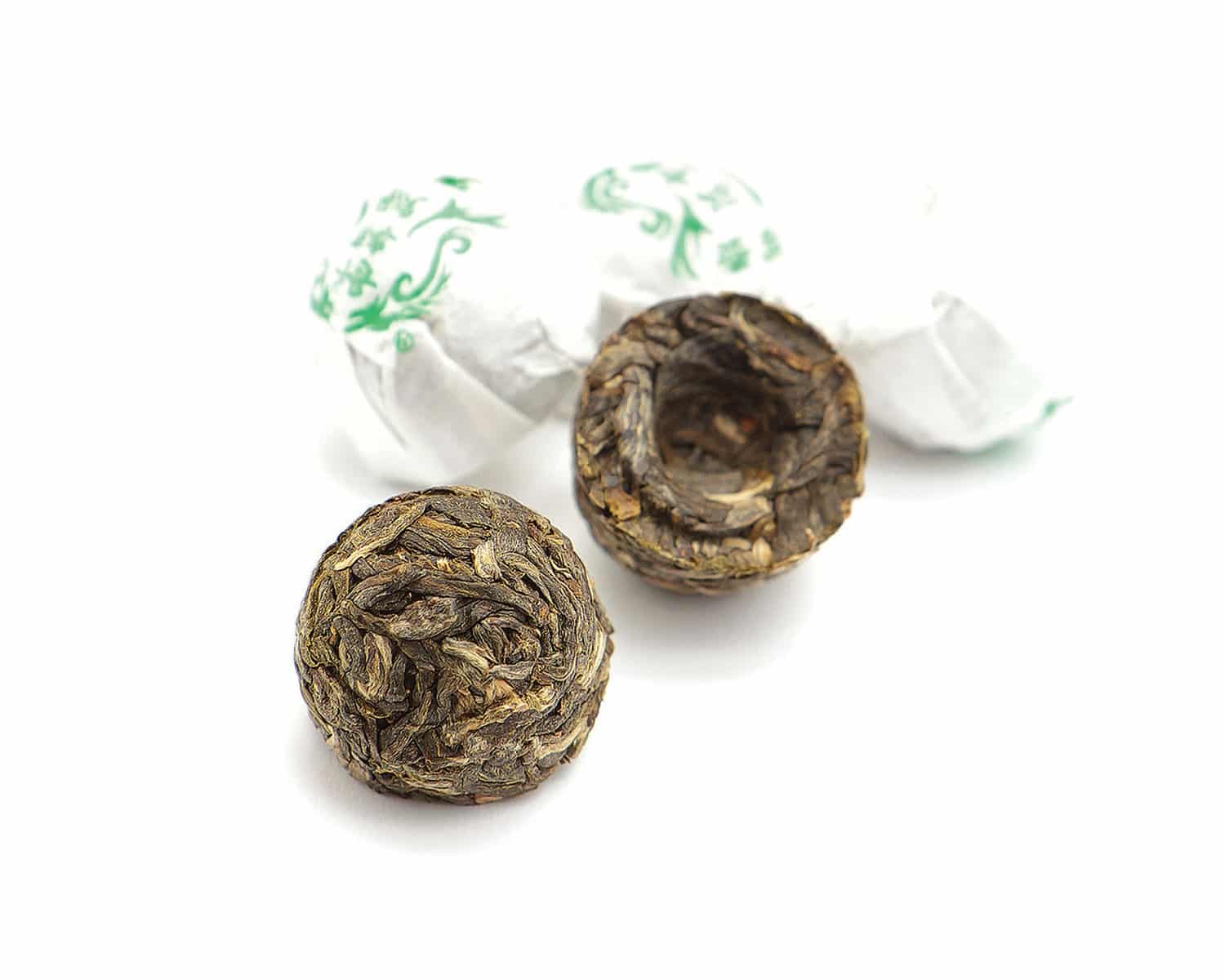
Humidity, tropical rain and fierce sun made it difficult to transport loose leaves while preserving their quality. To protect the harvest on long journeys, growers steamed the leaves gently and pressed them into dense bricks and round cakes. Pu-erh’s familiar pressed shapes therefore developed partly as a practical solution to the challenges of transport and storage.
Historical ARMA reports and the ‘models’ tea’ reputation
Pu-erh has a long traditional association with wellbeing and longevity. Modern promotional literature has also discussed digestion, metabolism, cholesterol and weight, but such claims require reliable clinical evidence and should not be treated as established therapeutic effects of the drink.
In Europe, pu-erh acquired nicknames such as ‘models’ tea’ and ‘beauty tea’. The original article cites a 1990 report attributed to the French association ARMA and repeats the following weight-loss figures. A verifiable primary study has not been established here, so the figures are historical claims rather than expected outcomes:
- A reported loss of 4–7 kg in one month among participants described as overweight;
- A reported loss of up to 12 kg over three months;
- A reported reduction in waist circumference of 10 cm or more.
Traditional wellbeing claims: digestion, circulation and smoking
Tea enthusiasts often describe pu-erh as creating a sense of clarity, relaxation and bodily comfort, sometimes using the term cha qi).
Traditional and promotional accounts credit pu-erh with benefits for digestion after rich meals, cholesterol, bacteria, headaches and the removal of nicotine or ‘toxins’. These should not be taken as proof that drinking pu-erh treats disease or neutralises smoking. Tea contains caffeine, and personal responses vary. Its place is as an enjoyable beverage, not a substitute for medical treatment or smoking cessation.
Shu and sheng pu-erh at iTea, with delivery in Israel
For more than ten years, iTea has supplied Chinese tea to Israel, sourcing from selected producers. Its collection includes the two principal pu-erh styles:
- Shu pu-erh (ripe pu-erh): tea made using accelerated microbial post-fermentation, with a smooth, substantial infusion and woody or chocolate-like notes;
- Sheng pu-erh (raw pu-erh): tea that matures naturally and slowly, developing a complex aromatic profile and attracting collectors interested in its ageing potential.