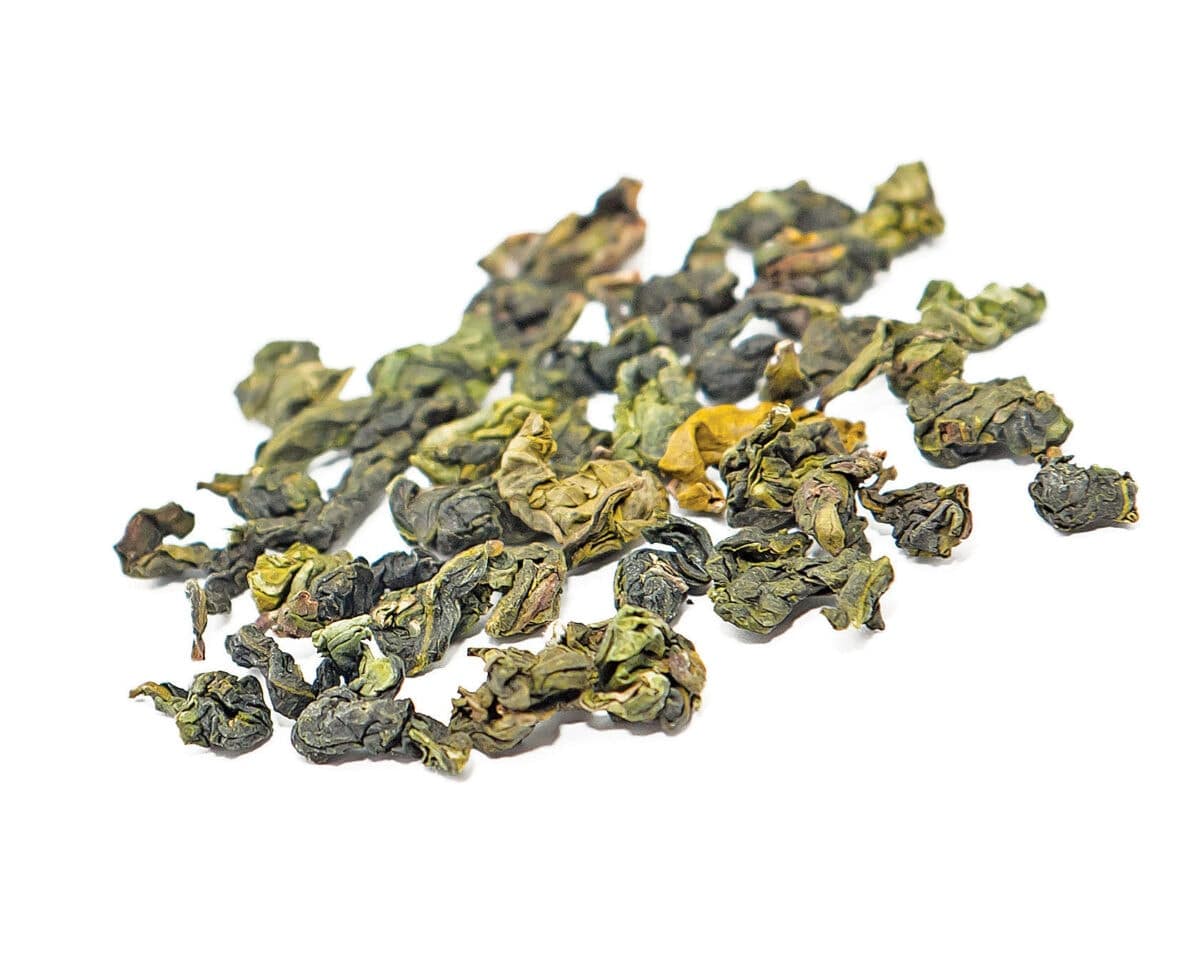
Oolong, or ‘Black Dragon’, is a celebrated family of partially oxidised Chinese teas. The original article describes oxidation levels of 20–50%, although the wider category includes a broad range of styles. Oolongs bring together freshness, depth and complex floral aromas. Famous varieties include Da Hong Pao from the Wuyi Mountains, Tie Guan Yin from Anxi and Ba Xian. Explore their stories, processing and changing flavours in the iTea collection.
The famous Da Hong Pao auction: US$25,000 for twenty grams
Twenty-five thousand dollars for twenty grams of tea: this remarkable auction price was reported in 2005 for a rare Chinese tea, Da Hong Pao (‘Big Red Robe’), and became one of the best-known stories of the tea world.
The leaves came from old mother bushes in the rocky Wuyi Mountains of Fujian, traditionally said to be around 350 years old. Growers have propagated plants from these celebrated bushes, but tea enthusiasts distinguish their harvests from the rare original tea.
The name oolong: a black dragon rather than ‘turquoise tea’
Da Hong Pao belongs to the celebrated oolong family. In Europe and Russia, oolong is sometimes called ‘turquoise tea’, a description associated with translation traditions and the blue-green appearance of some dry leaves.
The original Chinese name refers to something different. The first character, wu (乌), means dark or black, while the second, long (龙), means dragon. Oolong therefore translates as ‘Black Dragon’.
Partial oxidation: a treasure chest of tea flavours
In processing complexity, oolongs occupy a distinctive position between green tea and fully oxidised red tea, known in the West as black tea. The degree of oxidation varies with the variety and regional tradition; the styles discussed here are described as approximately 20–50% oxidised.
The result combines the freshness of green tea with greater depth and an intoxicating floral fragrance, as though many treasures of the tea world had been gathered in one box. Oolong also changes beautifully over successive infusions, revealing new facets of its flavour and aroma.
Oolong in tea culture and discussions of wellbeing
Oolong is associated with mountainous growing regions and a long tradition of contemplative tea drinking. Daoist and Buddhist tea culture values the calm, attentive experience of preparing and sharing tea.
Oolong contains caffeine and polyphenols. Traditional and promotional accounts associate it with digestion, metabolism, cholesterol and physical endurance, but these claims should not be presented as proof that the drink prevents strokes, improves muscle oxygen supply or treats excess weight. Its most immediate pleasures are its flavour, aroma and the pause it creates in the day.
The legend of Tie Guan Yin: the bodhisattva and the weight of iron
iTea, which has supplied Chinese tea in Israel for more than ten years, offers classic oolongs including Tie Guan Yin and Ba Xian, allowing enthusiasts to explore the family without seeking rare auction teas.
Tie Guan Yin, ‘Iron Guanyin’, is among the world’s best-known oolongs. An old story tells of a poor elderly farmer in Anxi, Fujian, who often passed a neglected temple dedicated to the compassionate bodhisattva Guanyin. Out of respect, he began cleaning and caring for it. Years later, Guanyin appeared in a dream and told him of a treasure behind the temple, which he should share with his neighbours.
The farmer found a single tea bush and carefully replanted it beside his home. When he brewed the first harvest, he was amazed by the honeyed aroma and the weight of the leaves, which sank to the bottom of the cup like iron. He named the tea in gratitude to Guanyin. Historical traditions place Tie Guan Yin among Anxi’s prized teas from the eighteenth century onwards.
Tie Guan Yin’s rolled leaves and uneven oxidation
Tie Guan Yin’s green-gold infusion offers a natural nectar-like sweetness and lingering notes of fresh flowers and lilac. It invites unhurried conversation and quiet attention.
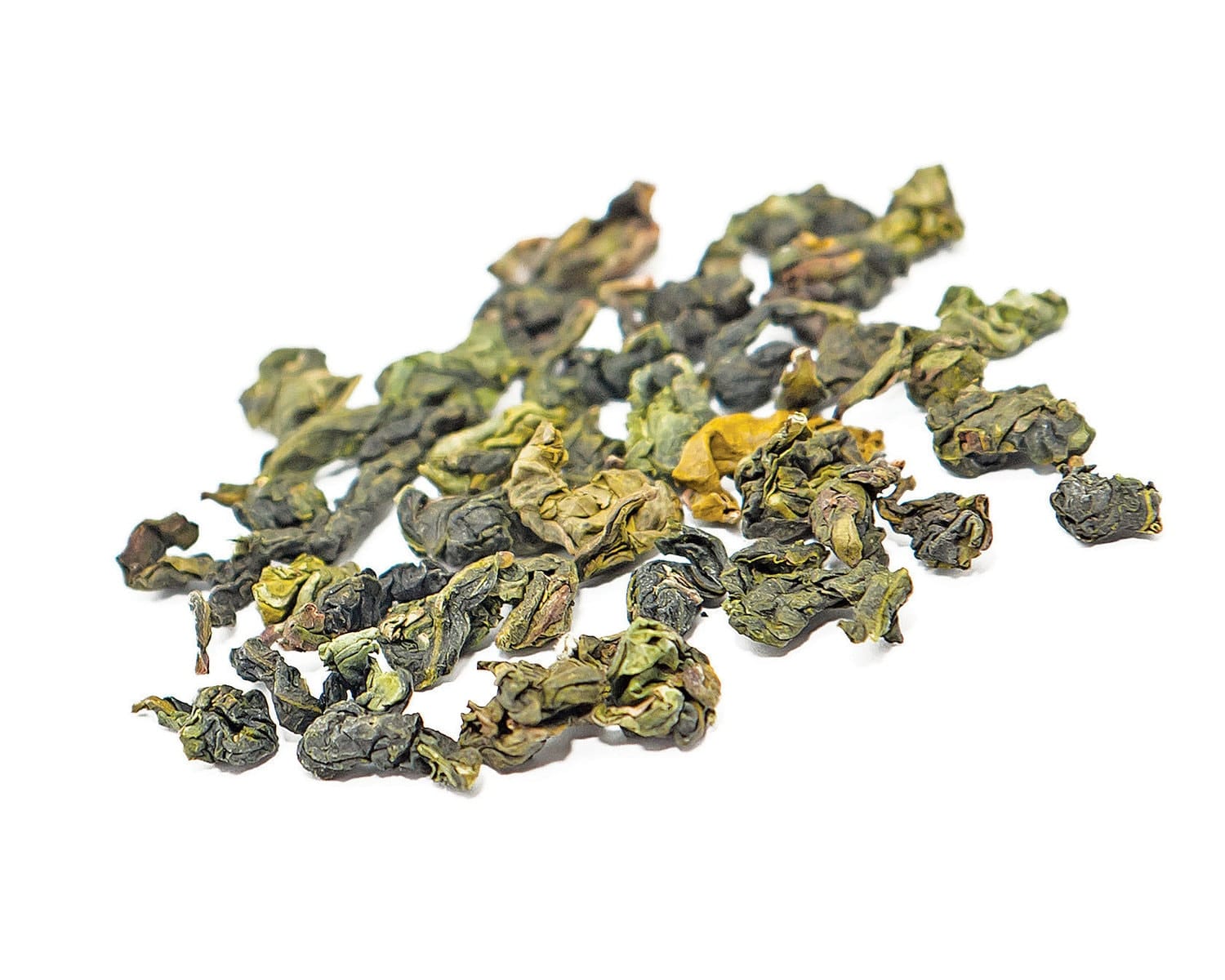
The leaves are rolled into dense, heavy pellets. During brewing they slowly unfold, revealing a characteristic of traditional processing: the edges are more oxidised than the firmer green centre.
Dark Ba Xian oolong: ‘Eight Immortals’ and charcoal roasting
Ba Xian, or ‘Eight Immortals’, is a well-known darker oolong associated here with the mountain regions of Fujian and Guangdong. Large, mature upper leaves are selected, withered, rolled lengthwise and slowly roasted in woven baskets above charcoal.
The dry leaves are dark, almost black, around 3–6 cm long, with aromas of ripe fruit, honey and a refined smoky note. Its substantial infusion approaches the depth of red tea, with a pronounced astringent flavour and a long, warming finish.