The origins and history of tea
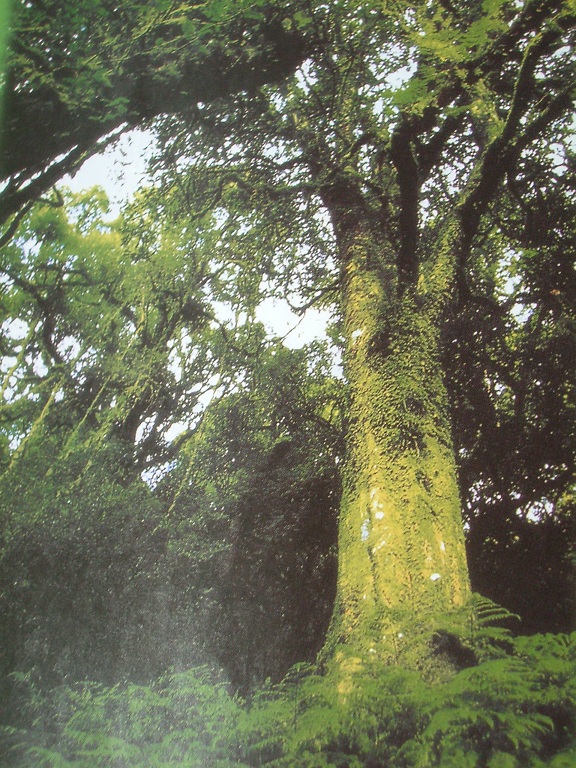
China is rightly regarded as the cradle of the world’s tea culture, with a tradition extending back more than 4,000 years and closely associated with Yunnan.
The tea plant belongs to the camellia genus, Camellia, within the tea family. The ancient ancestors of this plant group emerged around the transition from the Mesozoic to the Cenozoic era, approximately 65 million years ago. Camellia sinensis is most commonly seen as a small shrub with firm, fleshy leaves, although tree forms also occur.
According to legend, tea was discovered by the Divine Farmer, Shen Nong, traditionally dated to 2737–2697 BCE.
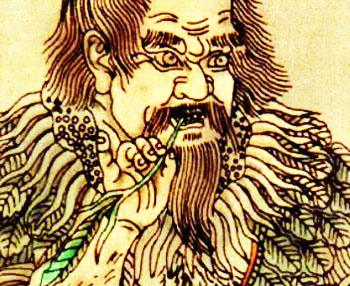
Shen Nong was said to have a body of transparent jade, allowing him to see what happened inside it. He used this gift to taste different plants in search of medicinal herbs. One story tells of an epidemic that led him to search for a plant that could help the people, and thus to discover tea. Another legend says tea saved him from poison. A text attributed to Shen Nong, compiled during the Eastern Han period (25–220 CE), recounts that he tasted a hundred herbs, encountered seventy-two poisons in one day, then drank tea and recovered.
From then on, tea held a special place in the natural world, distinguished from the ‘hundred herbs’ and celebrated as a remedy in traditional accounts. A dietary treatise attributed to Shen Nong says that, taken over time, tea gives strength to the body, contentment to the mind and resolve to the will. These are historical traditions rather than modern medical claims.
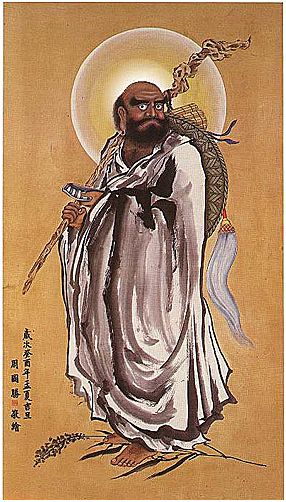
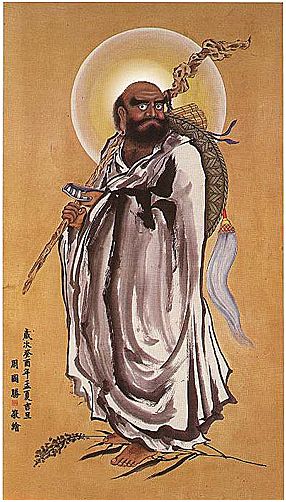
Another old legend links tea to Bodhidharma, the founder of Chan Buddhism. Seeking to stay awake during meditation, he prayed for help. In one telling, after struggling with sleep, he tore off his eyelids in anger and threw them onto a mountainside. Tea bushes are said to have grown where they fell.
Tea was first used as a medicinal plant. Fresh leaves were chewed raw; later they were boiled in water to make a broth consumed like soup. Guo Pu, a scholar associated with Chinese geomancy who lived in the early fourth century, described a small tea tree like a gardenia, whose leaves could be boiled and drunk as soup even in winter. Tea leaves were also formed into cakes, heated in ovens, ground into powder and stored in porcelain containers.
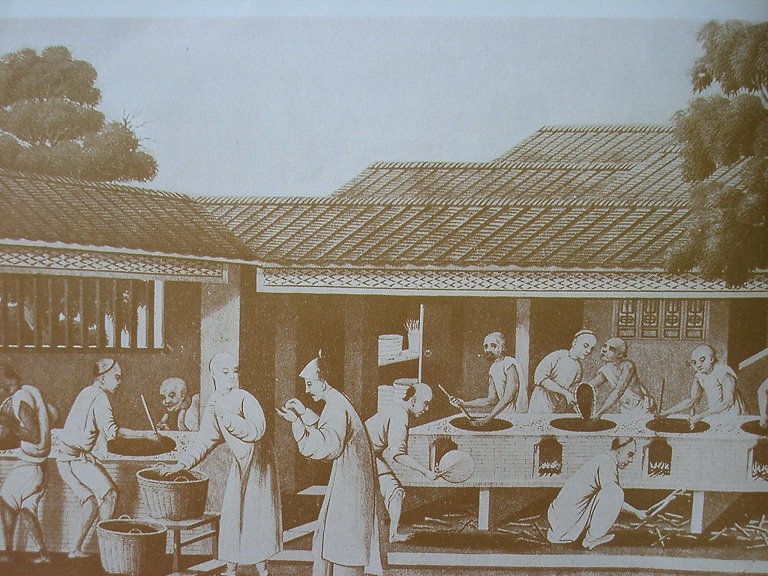
Later, tea leaves were dried in the sun and stored dry. Deliberate cultivation began in the gardens and parks of Chinese rulers. During the Han dynasty (traditionally dated here from 207 BCE to 220 CE), tea cultivation and drinking gradually spread beyond imperial residences to the wider population.
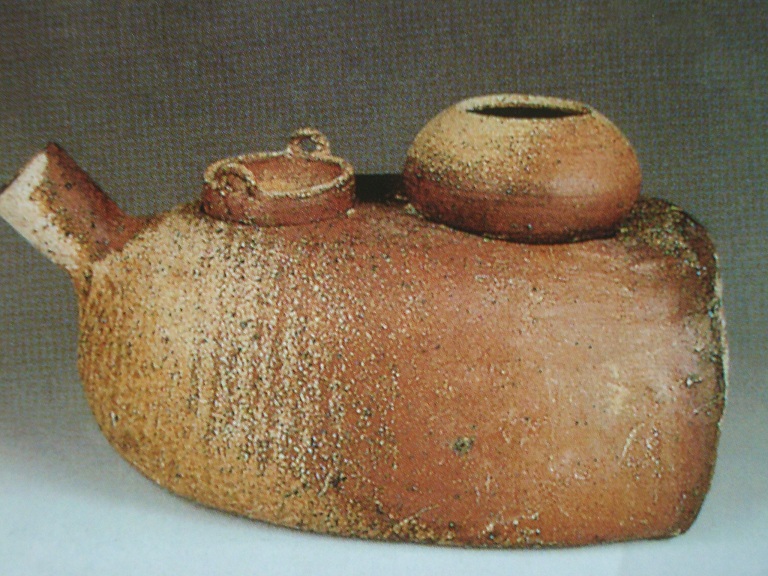
Tea drinking became a popular custom, and dedicated tea utensils appeared in prosperous households and the homes of wealthy landowners.
During the Tang dynasty (618–907), the tea trade and tea culture developed rapidly, helped by Buddhist and Daoist monks.
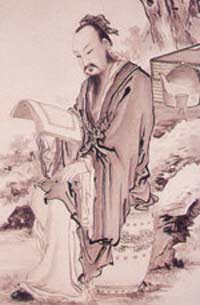 The Tang period saw the creation of Lu Yu’s Classic of Tea, the first comprehensive work devoted to tea and a major influence on the development and spread of tea culture.
According to tradition, Lu Yu grew up in a Buddhist monastery, learning the art of tea preparation from his teacher. He studied tea theory and took part in discussions about tea. Drawing together the experience of earlier generations and his contemporaries, he created the Classic of Tea. It describes the origins and characteristics of the tea plant, tools for harvesting and processing, tea utensils, production methods, brewing and drinking practices, and the names used for tea.
Among these names were 茶 (cha), 槚 (jia), 蔎 (she), 茗 (ming) and 荈 (chuan). By Lu Yu’s time there were already several names for tea. The older character 荼 (tu), widely used for the plant, differs from the modern 茶 (cha) by a single stroke.
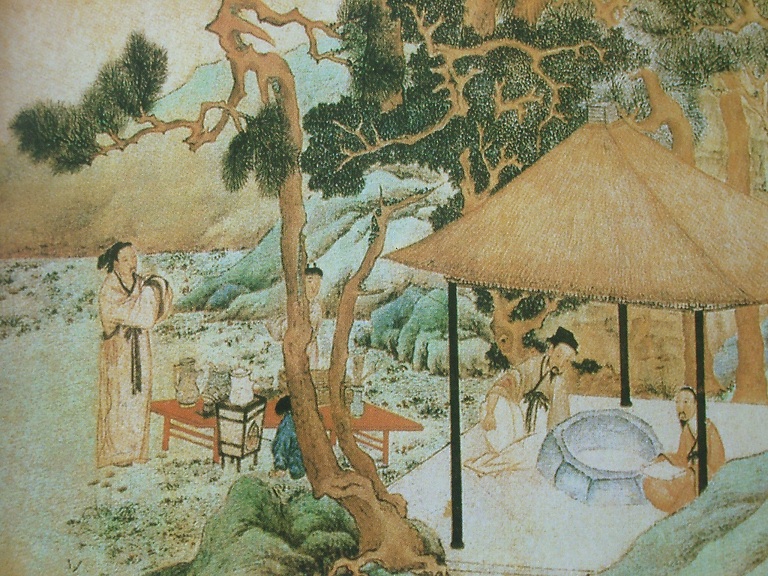
The publication of the Classic of Tea helped spread tea drinking throughout China, where it became a national beverage.
During the Song dynasty (960–1279), teahouses and pavilions appeared, serving prepared tea. Tea-growing
 areas continued to expand, and processing techniques improved. Tea competitions became fashionable among aristocrats and the artistic elite, developing further in later periods.
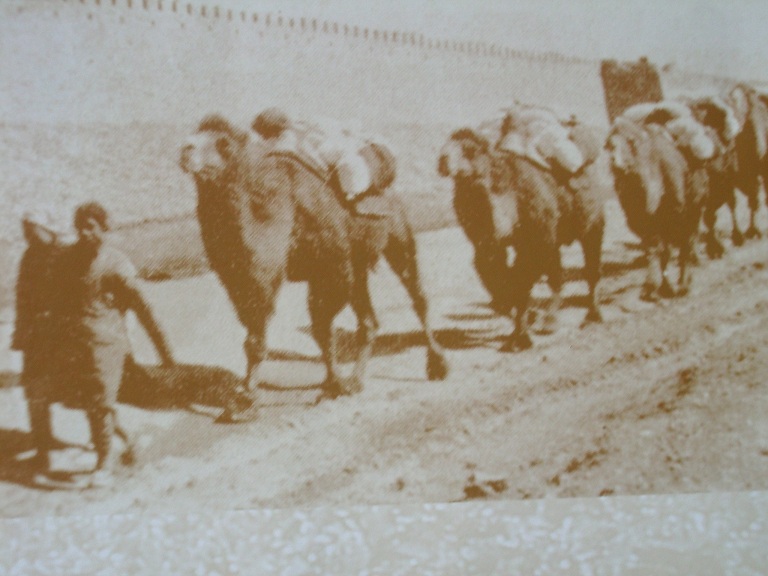
During the Song period, tea also spread more actively to neighbouring countries along caravan routes.
During the Ming dynasty (1368–1644), pressing tea into cakes gradually became less common. New processing techniques developed, contributing to the variety of green, red, dark and scented teas. Another important development was vegetative propagation of tea plants.
The late Ming and early Qing periods brought a development that transformed the tea world: distinctive methods for producing oolong, for which tea lovers remain grateful to Chinese tea makers.
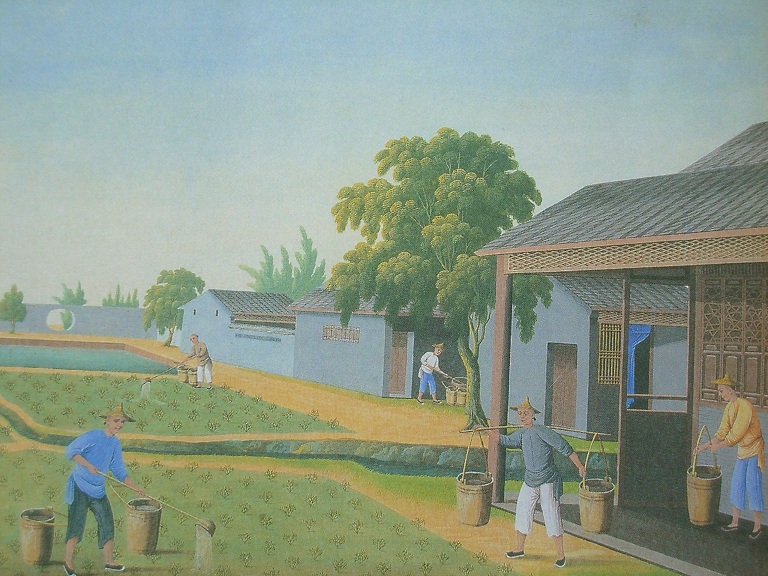 Over the centuries, tea-making changed enormously. Loose-leaf tea increasingly replaced bing cha, tea pressed into cakes, while the earlier dominance of green tea gave way to a wide range of tea types and varieties.
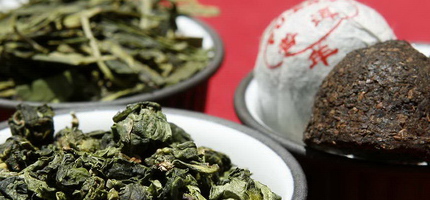
A general Chinese classification developed around the degree and form of processing, often described through oxidation or fermentation. These chemical changes strongly influence the aroma, flavour and colour of the infusion. Tea was divided into six main groups: green, red, partially oxidised oolong, white, dark and yellow. Within them emerged many individual varieties with their own character. China’s mountain landscapes, mist, water sources, sunlight, temperatures and humidity all contributed to their diversity.
Poets, writers and statesmen have celebrated tea since ancient times. Lu Yu called it a remarkable tree from the south; the poet Su Dongpo compared it to a beautiful woman; and the Qing emperor Qianlong likened it to the tender heart of a lotus.
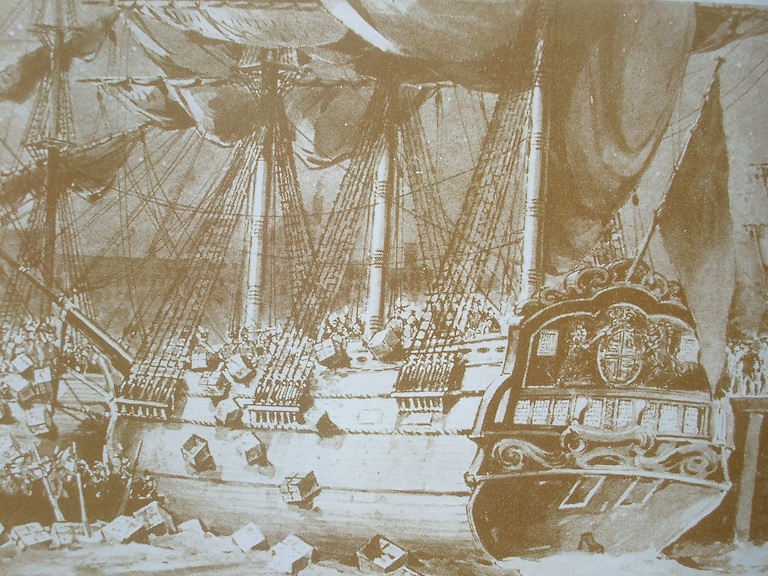
Historical accounts trace the tea traditions of many peoples back to China. Tea reached neighbouring countries overland along caravan routes. This account places its arrival in Russia in the sixteenth century through Cossack contacts, followed by expanding trade between Russia and China in the nineteenth century. Tea reached Korea and Japan during the seventh to ninth centuries. From the seventeenth century, it gradually gained popularity in Europe. A British ship trading in China in 1699 returned with silk and the remarkable plant known as tea.
Tea found favour at court and became fashionable at social gatherings. Trade was vital to England: tea, silk and spices were bought in China, while cotton goods, yarn, alcohol, opium and weapons were among the goods taken east.
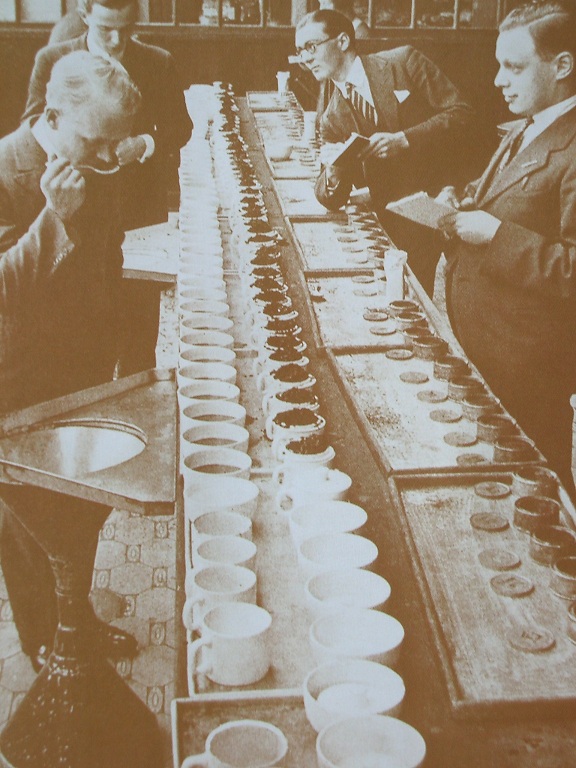
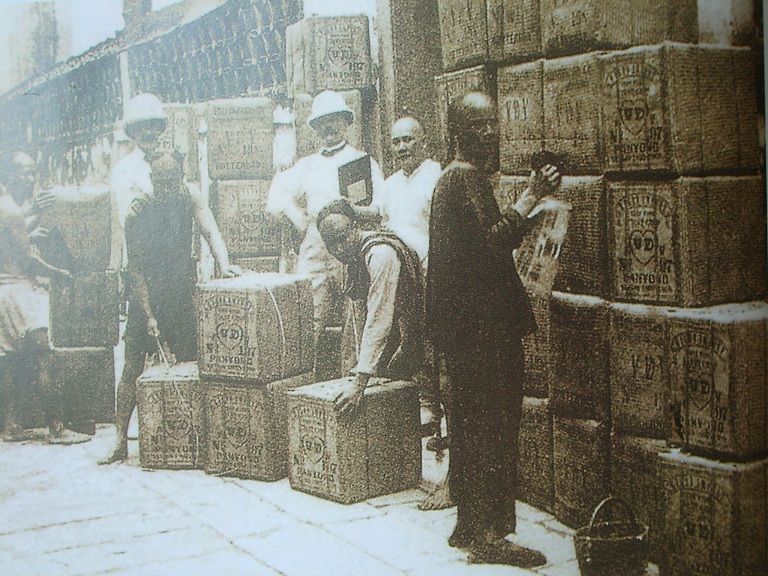
Over the following decades, tea became one of the most popular drinks in the West, especially in England, a major trading power. It also became an important source of domestic tax revenue for the British government. By the end of the eighteenth century, the flow of silver to China and the imbalance in trade had become a serious concern.
Throughout that century, the British East India Company — a powerful enterprise with both private and state backing and extensive trading privileges in Asia — sought alternatives to paying in silver. It offered textiles, looms, weapons and ships, but Chinese rulers saw little need for many foreign goods.
Opium then became central to this trade. Although it had long been known in China, its importation and sale were restricted, and much of the expanding trade was illicit. The East India Company and associated merchants sold opium for silver, helping reverse the earlier flow of precious metal. Over time, opium became a dominant imported commodity, dramatically changing relations between China and Western traders.
The spread of the drug had devastating social consequences. Disputes over the opium trade contributed to the Opium Wars between China and Britain, which ended with major advantages for Britain.
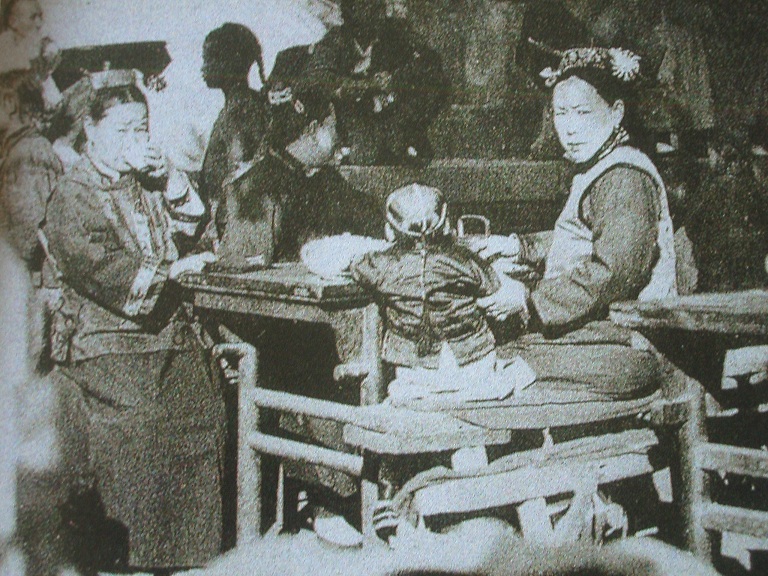
These events, together with rising European demand, encouraged tea cultivation outside China, particularly in British-controlled India. Reproducing the full variety of Chinese tea-making traditions proved difficult. Many methods had been developed within families over centuries and passed from generation to generation. Different growing conditions, soils and climates also gave the teas produced elsewhere their own characteristics. This helps explain the distinction tea enthusiasts often draw between Chinese teas and those from other origins.
Modern Chinese tea-making brings together generations of experience. Traditional cultivation and careful hand-processing remain important, allowing today’s drinkers to encounter flavours connected with a long history.
For Chinese people, tea is part of culture and everyday life. Traditional and modern teahouses are found everywhere, and tea is enjoyed at every time of day and in every mood. The writer Lin Yutang described people drinking tea at home, in teahouses, at meetings, during arguments and even late on moonlit nights.
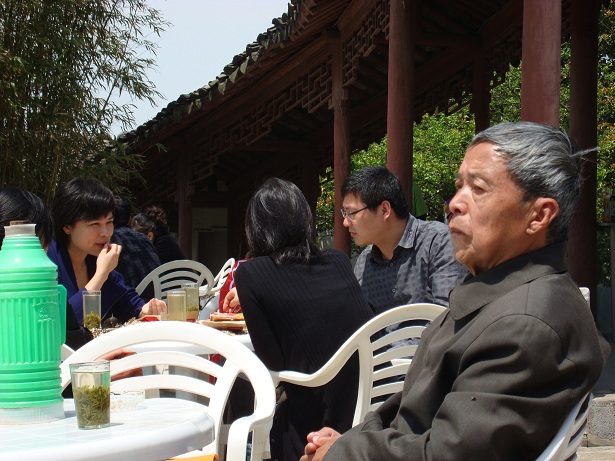
Drinking tea in China can be about more than tasting the infusion: it can also mean entering a reflective state of mind. Tea has a place in Buddhist, Daoist and Confucian traditions, where it accompanies contemplation and the search for clarity. Its special status appears throughout poetry and prose.
The poet Huang Tingjian (1045–1105) described tea’s rich flavour and seemingly endless fragrance as a journey through a dreamlike landscape. In his imagery, old friends appear again, distance falls away, and words give way to quiet inward joy.
Lu Tong, a poet of the Tang period (618–907), sent a friend a poem now known as Seven Bowls of Tea. Its sequence describes the first bowl moistening the lips and throat, the second lifting the heart’s loneliness, the third opening the mind to a vast store of words, and the fourth bringing a light sweat through which worldly troubles disappear. The fifth purifies the body, while the sixth draws the drinker towards the spirit. At the seventh, the poet imagines becoming so light that a breeze carries him towards Penglai, the island of the immortals. This is poetry’s vision of tea as a path beyond everyday cares.
Material kindly provided by Song He — Crane and Pine